

THE MISSION
(1) Research and improve key journeys and structures throughout multi-region site(s)
(2) Develop new robust, future proofed design system and digital brand for new portal and future builds
(3) Ensure a more cohesive and intuitive digital environment across platforms
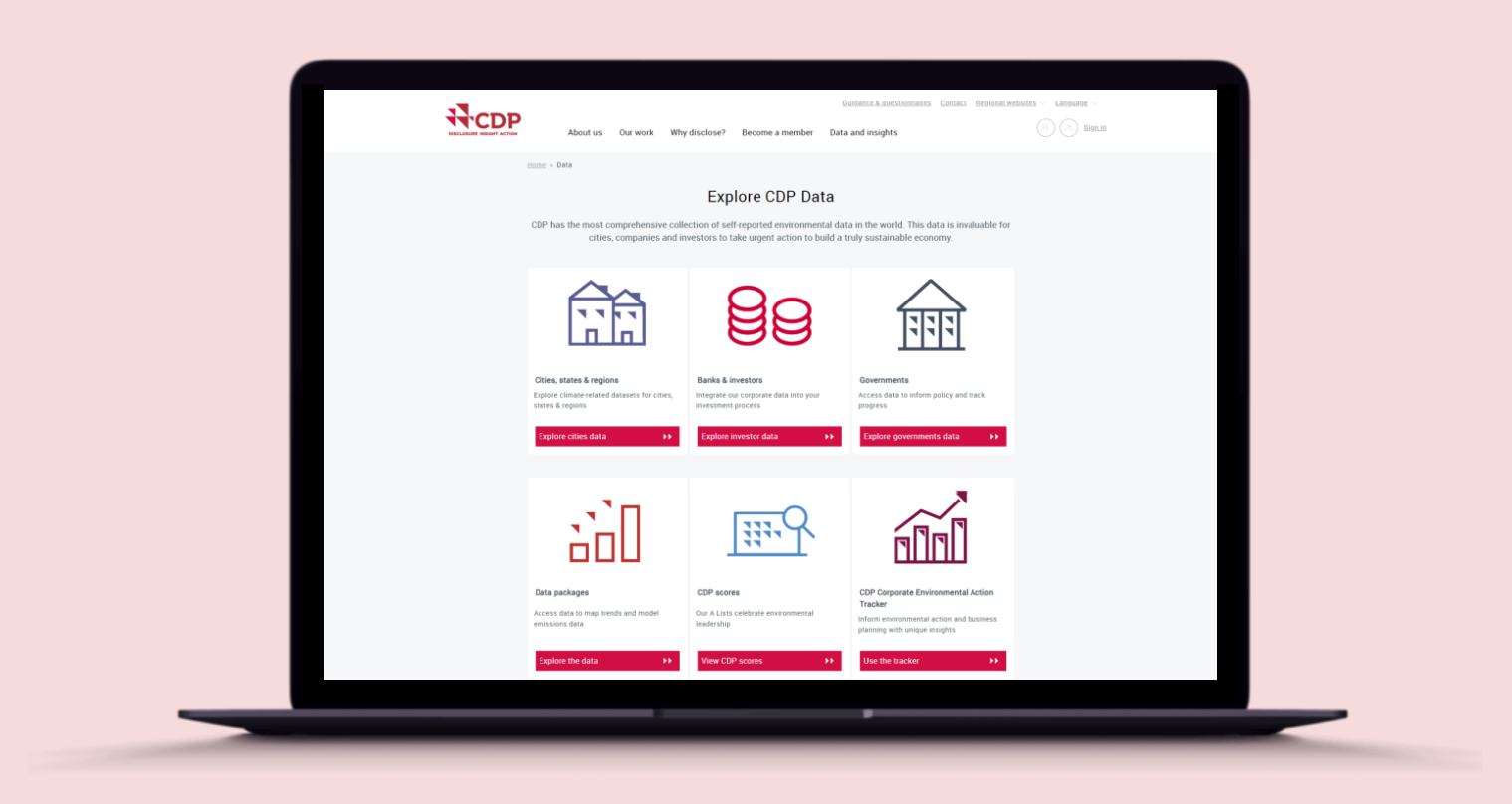
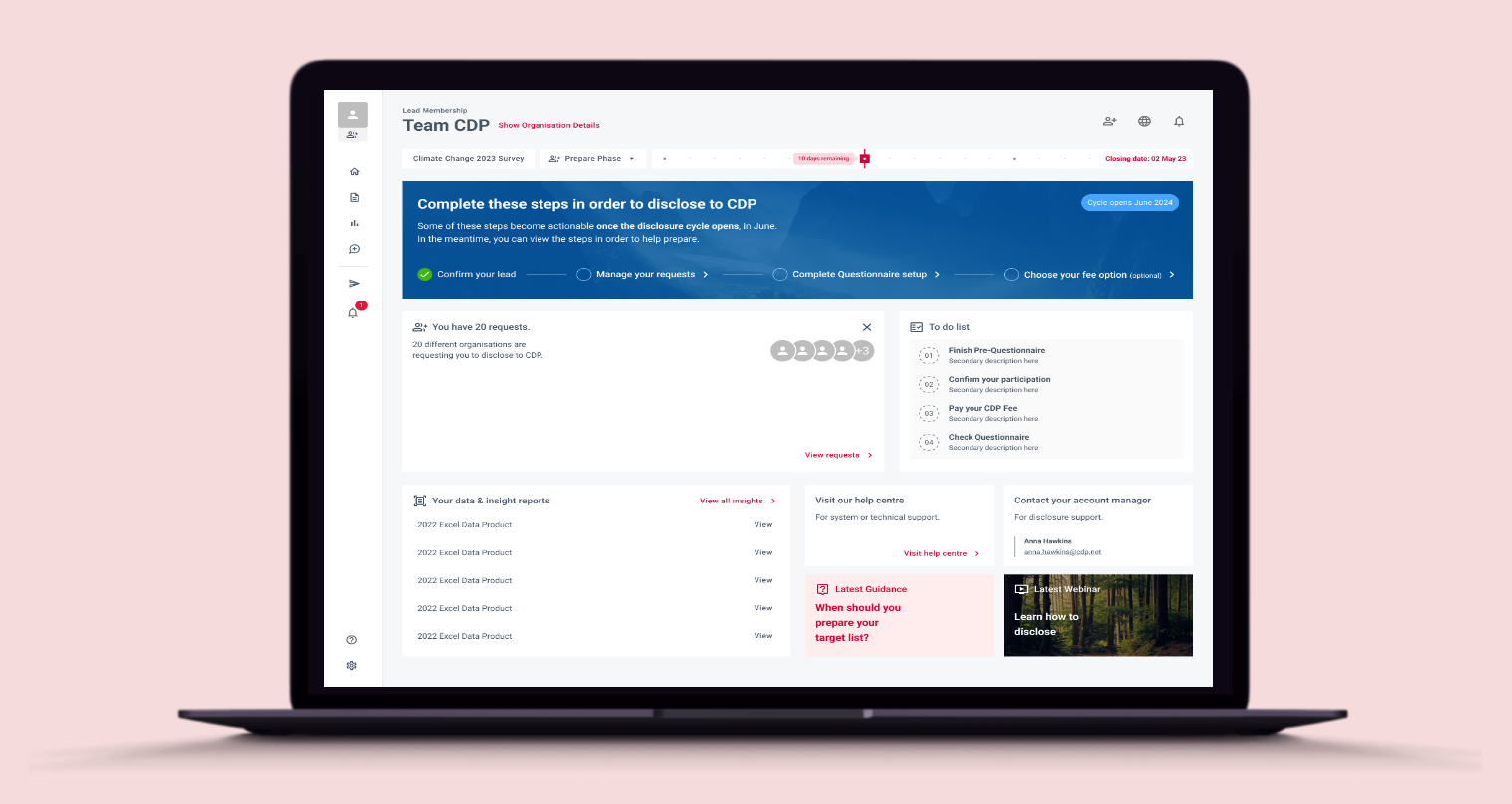
PROCESSES
Competitive analysis | Surveys & User interview | User flows | personas | JTBD & scenarios | Usability tests | Lo-fi to hi-fi wireframes | Design system creation | Digital branding/principles | Iconography | Illustration | Typography | Project management | Feature prioritisation & project canvas | Hotjar | Google Analytics | CMS | SEO
BUSINESS GOALS MET
Establish UX as a crucial element of the business process
Streamline siloed products into single access point
Increase conversion rate of disclosure; new sign ups, retention, and completion. (disclosure metrics close to doubled in a year)
Decrease average time of disclosure`
Improve digital metrics (total number of users, hits on key pages, organic traffic, bounce rate, event sign ups, report downloads, etc.)
Develop internal structures/processes to improve efficiency and scalability
Improve brand perception
Improve learnability and familiarity of product
Establishing new design system + digital branding to homogenise and future proof products
Align brand and digital
Improve internal digital processes
Comprehensive content audit across multiple platforms/regions to improve communication
Establish and convey company culture across various outlets
Improved translation and implement streamlines internal translation processes across regional content
MY ROLE AT CDP
CDP is the leading NGO at the forefront of collecting environmental disclosure data across the world, from small businesses to the largest governments.
I was the first UX Designer to join at the beginning of a total overhaul of all things digital. Initially collaborating with an agency, BCG, my role kicked off by setting up robust and scalable UX processes. Additionally, I was tasked with developing a new robust design system and digital brand. A year down the line, having proved the success and importance of UX/UI work, we are 6 Designers strong and the product team is now self-sufficient.
My role lives in the Marketing & Communications team and so I have cultivated strong relationships across marketing and tech. When I joined, the cross-regional corporate website(s), was frankensteined and the CMS was crumbling due due a decade of unmanaged growth. Though it still has a way to go, we have tamed this behemoth by restructuring the sitemap, signposting, and content to be more intuitive. Considering the holistic journey beyond website, I built an intuitive funnel from first contact through to disclosing. In a year, these changed have close to doubled all disclosure conversion rates (new discloser sign ups, retention, and completion) and improved all key metrics (total number of users, hits on key pages, organic traffic, bounce rate, event sign ups, report downloads, etc.). With CDP being a global NGO, there is the need to consider a global audience across various languages and regions and so I have helped to set up streamlined internal translation processes. By garnering strong relationships with stakeholders and leveraging qualitative and quantitative data, we have been able to creatively prioritise features to achieve the biggest relative wins, despite the limited resource of a charity.
On top of design work, I have established advocacy for the user and helped to workshop, research and develop key marketing and business campaigns.
THE WEBSITE
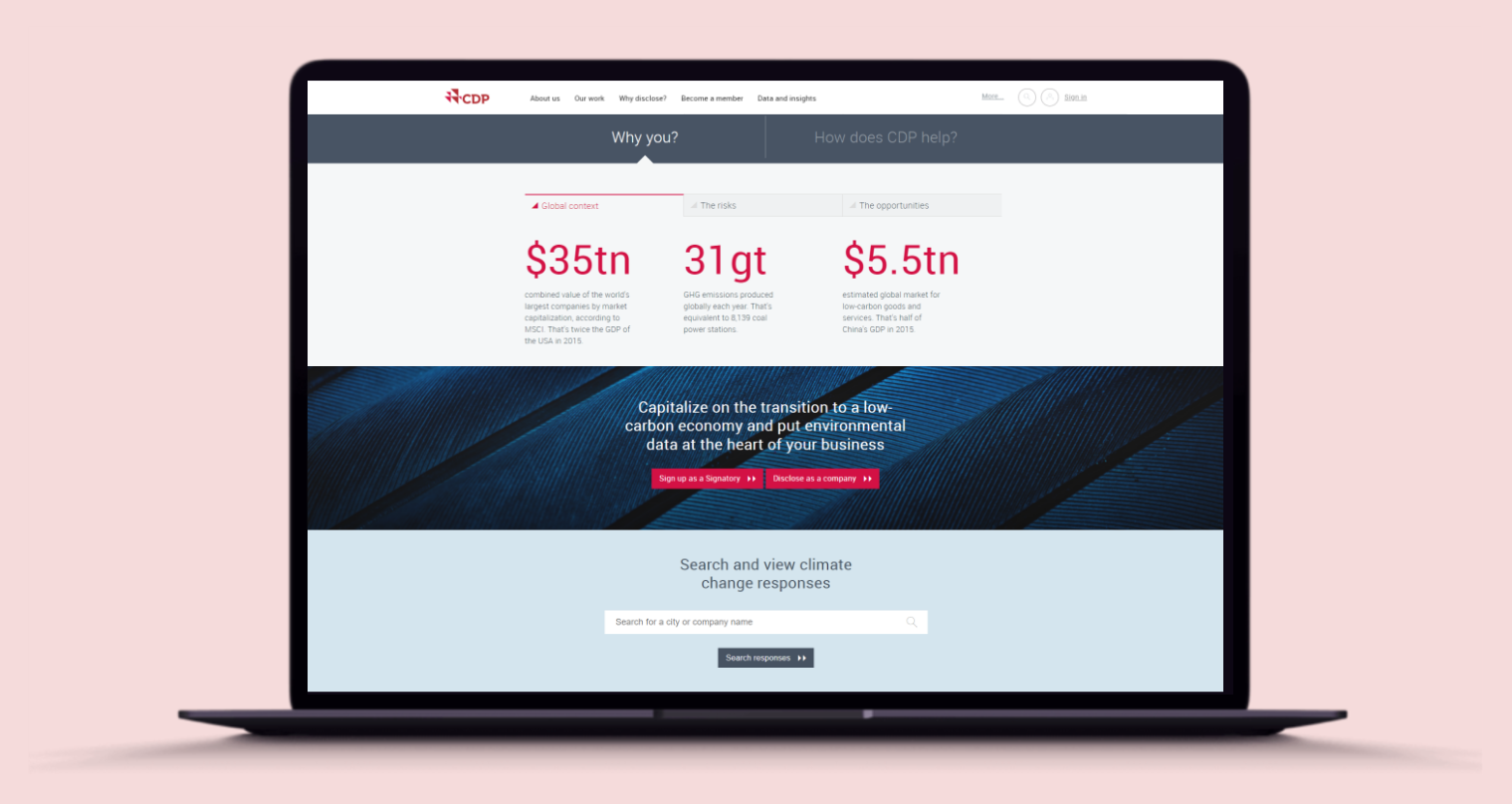
WEBSITE BRIEF
Conduct research into how we can improve the infrastructure and key journeys across a multi-regional site. Prioritise and implement changes based on business needs and user research.
WEBSITE OVERVIEW
When I joined, the site was a disorganized mix of misaligned regional sites, with diluted ownership and a crumbling CMS. Through direct discussions with users, surveys, and historical data, we identified two major issues: non-intuitive user journeys and complex, repetitive, misplaced content. By presenting a clear plan for the future, along with evidence of the site's fractured foundation, I secured approval and funding for a complete site overhaul with a new CMS.
Unfortunately, due to a lack of developer time and multiple restructures across CDP, this project has yet to commence. Despite this, by reflecting on data and user feedback, we have managed to prioritise key issues and accomplished a number of significant improvements. We have focused on changes that provide immediate benefits and lay the groundwork for future success, setting the stage for the eventual rebuild.
WEBSITE OUTCOMES
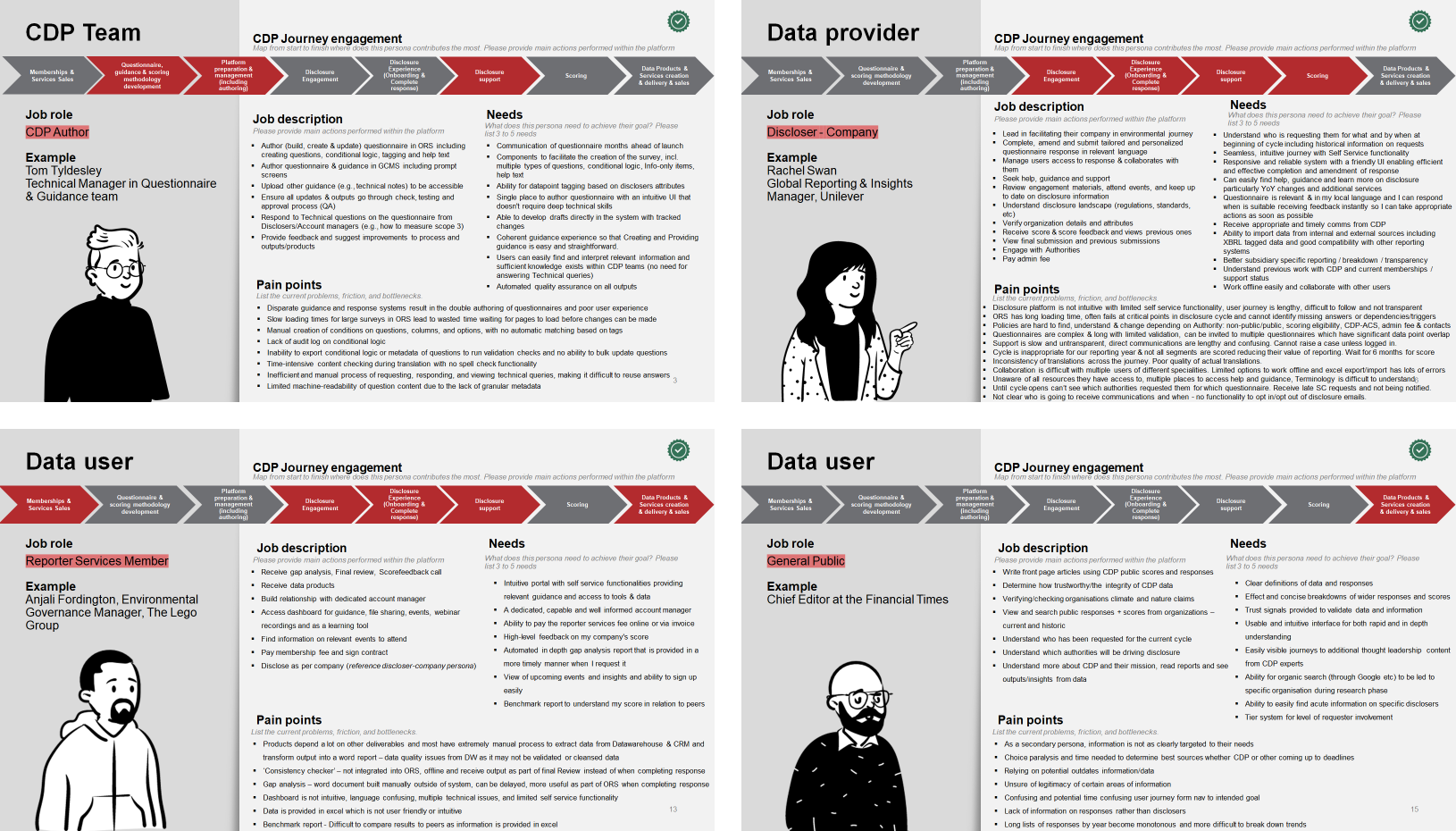
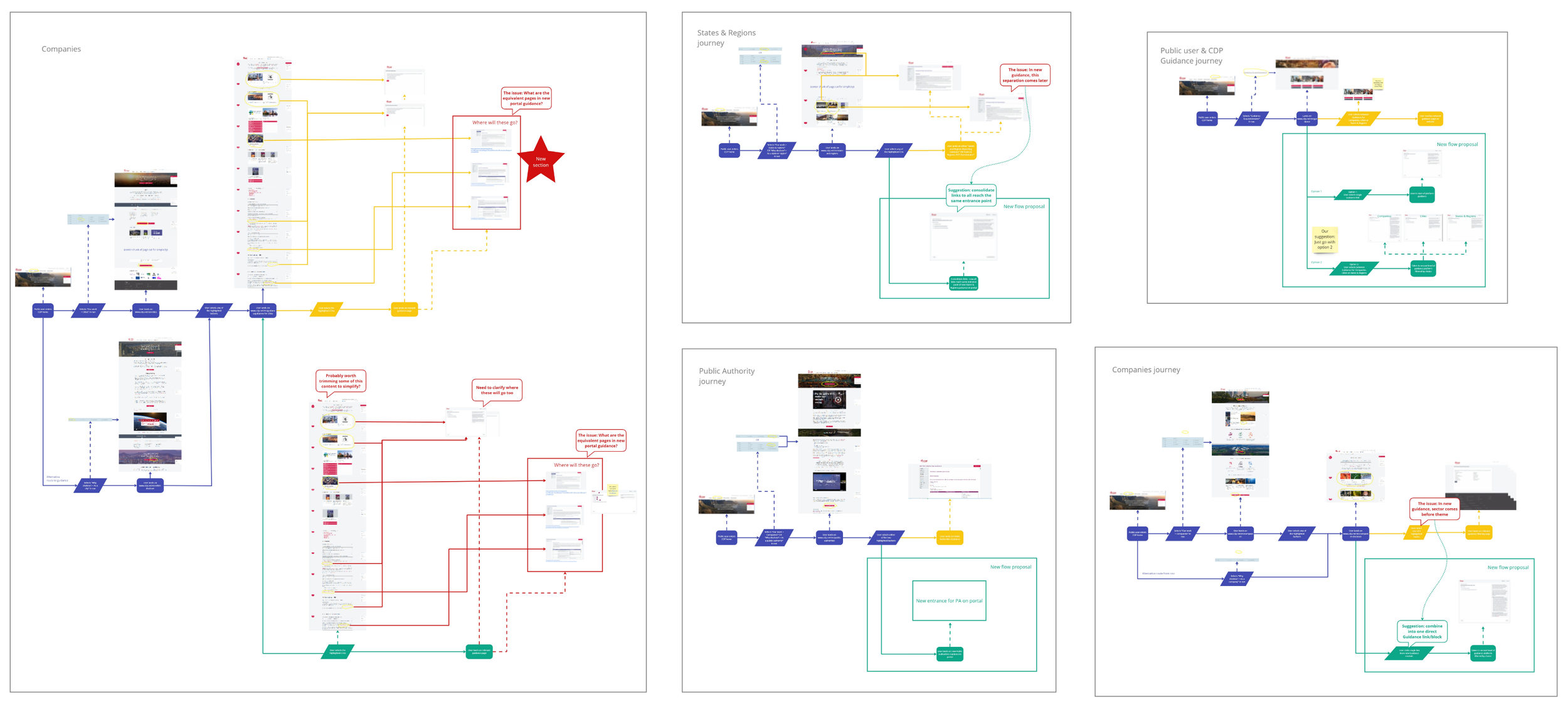
Early on, I developed personas and constructed key user journeys which led to rearranging and renaming navigation titles, sitemap structures, and signposting language. By considering holistic journeys beyond the website, we have improved the connections between the corporate site and other customer platforms, including the disclosure portal and various data platforms. By working iteratively, in increments, we have reduced the burned on both the internal team and the users.
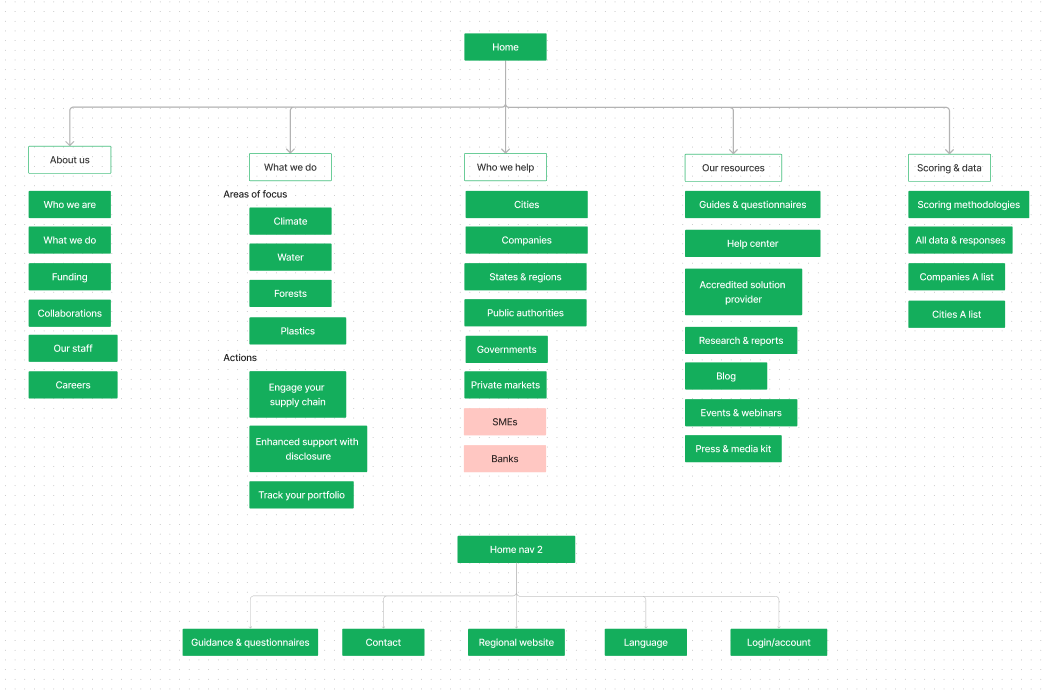
Next, I redesigned key pages that were previously confusing, repetitive, and often hidden deep in the sitemap. An extensive site audit revealed hundreds of outdated and duplicated pages. Step one was to set up some structural templates for related pages (e.g. the related disclosure paths for Climate, Water, Plastic, Forests, Supply Chain, etc.). By streamlining related paths, I have improved learnability and familiarity for users and also developed a foundation that helps us to update and maintain these pages more efficiently when needed.
Additionally, through the audit, I was able to group information more intuitively across the site and trim the repeated and dead pages. Together, these changes had an immediate and significant impact as we saw improvements in many crucial KPIs. During my time at CDP, we’ve seen improvement in total number of users, hits on key pages, organic traffic, bounce rate, event sign ups, report downloads, disclosure conversion rates, and more.
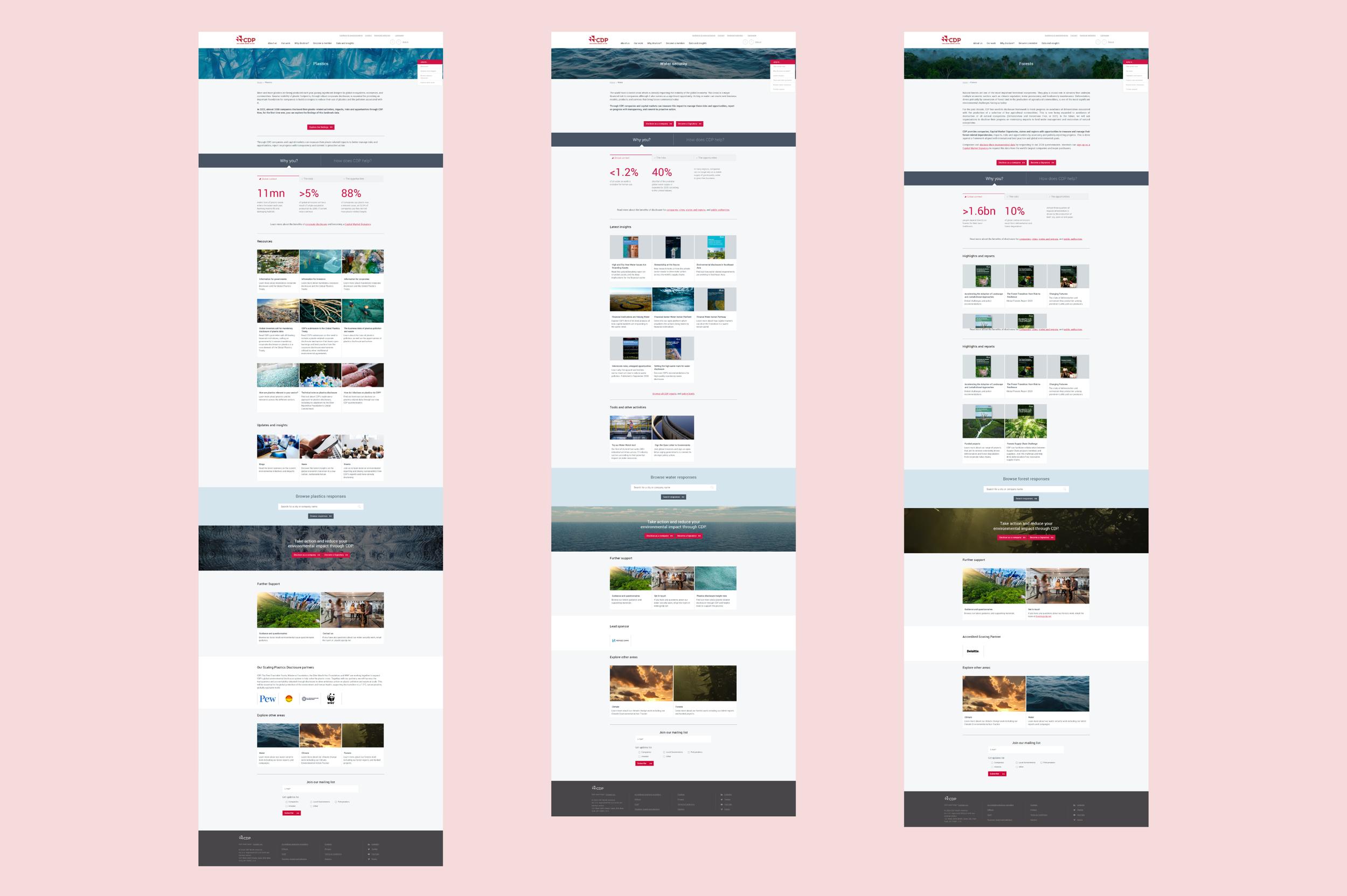
It wasn’t only content within the regional sites that was fractured and siloed. Account structures between the website and the portal were complicated and broken up. To overcome this, I oversaw the implementation of a totally new log in system. We were able to remove multiple siloed paths and create a single entry point for all users. This single entry point intelligently leads users to the correct area of the site or portal depending on their user type and permissions. As a nice little plus, this switchover to a new system also provided us and our users with greater security.
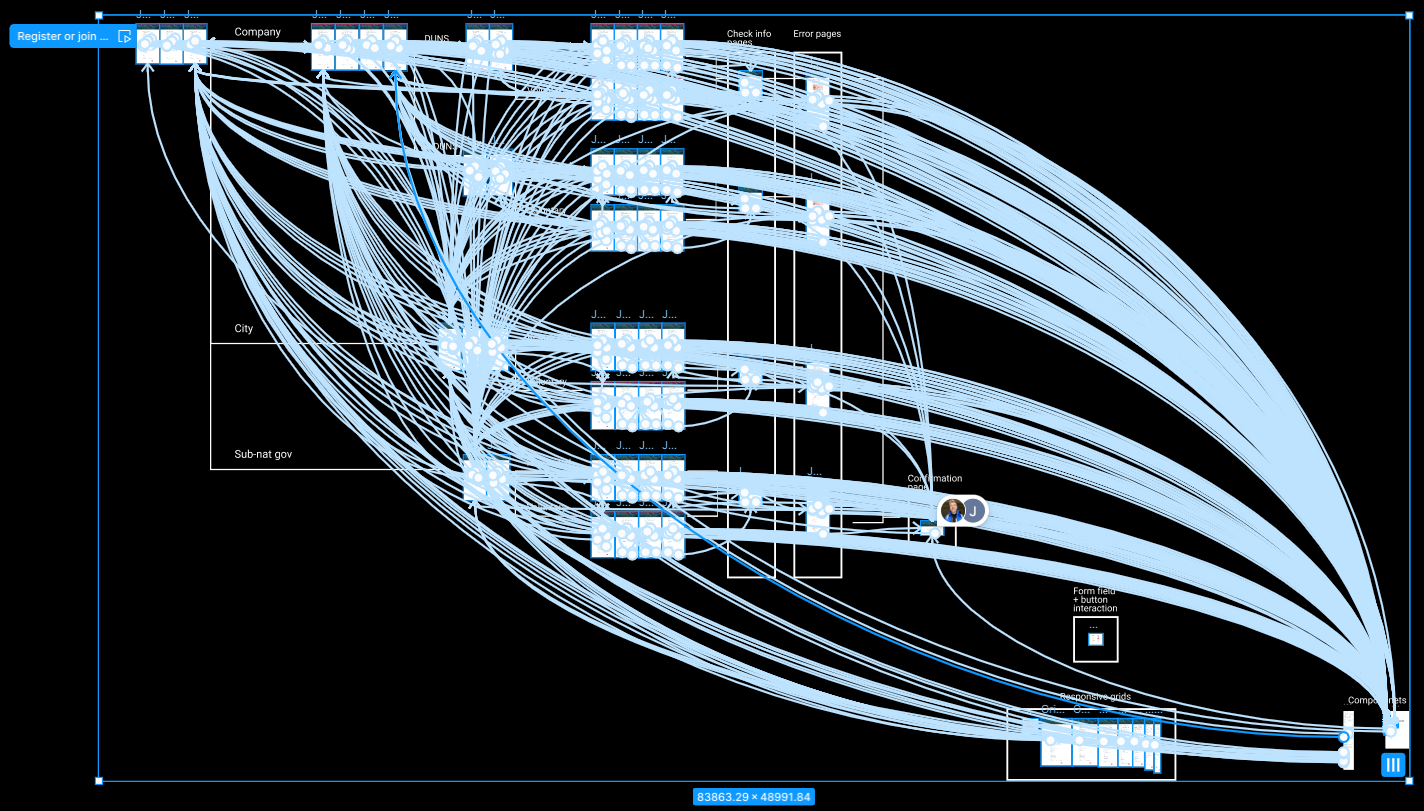
Similarly, the onboarding for new disclosers and new users was an outdated and broken up manual process. For many services, our teams were burdened with manually registering 1000s of new disclosers every year. So, I designed a one-size-fits-all online registration form. This single form now accounts for all users across multiple regions, language, areas of disclosure, permission levels, and types of entity. This project was a significant success story for CDP and has removed a substantule amount of manual work and future proofed the process, making it scalable for further anicipated growth. Below, you can see the a glimpse into the simplified complexity of the form.
THE PORTAL
PORTAL BRIEF
Develop a new design system and forward thinking, future-proof digital brand to allow the product to scale across CDP’s digital landscape.
Combine the siloed disclosure processes into a singular entry point that can accommodate vastly different entities with separate (but ultimately singular) ambitions.
PORTAL OVERVIEW
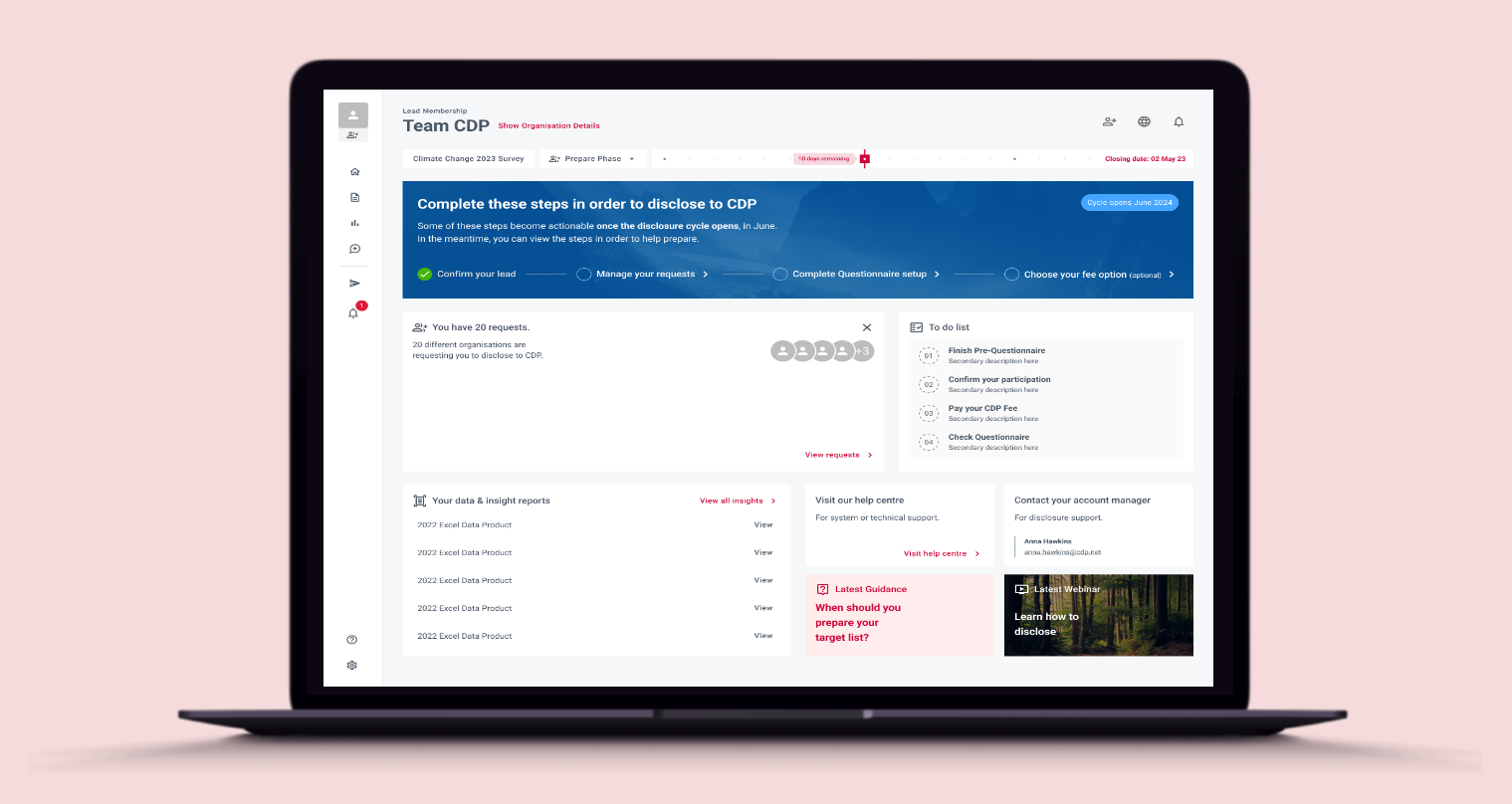
Before this new disclosure portal, CDP disclosure consistent of siloed questionnaires per theme (Climate, Water, Forests etc.) and a lot of manual form building/answering. This new portal creates a single entry point that cleverly filters users to specific disclosure needs within one combined questionnaire and sets up users with a hierarchy of permissions.
To break away from outdated processes there was a need to build a robust, future proof and scalable design system; this is where the bulk of my work was focused in this build.
PORTAL PROCESSES AND OUTCOMES
I was asked to help set the portal build up for success. At the project's inception, I collaborated with BCG’s product team to build user journeys and personas to guide the build's direction and feature prioritisation. On top of this, all we had to work with was an outdated catalogue of print design principles and a decade old, unstructured UI. We needed UI assets to build wireframes with and we needed them fast!
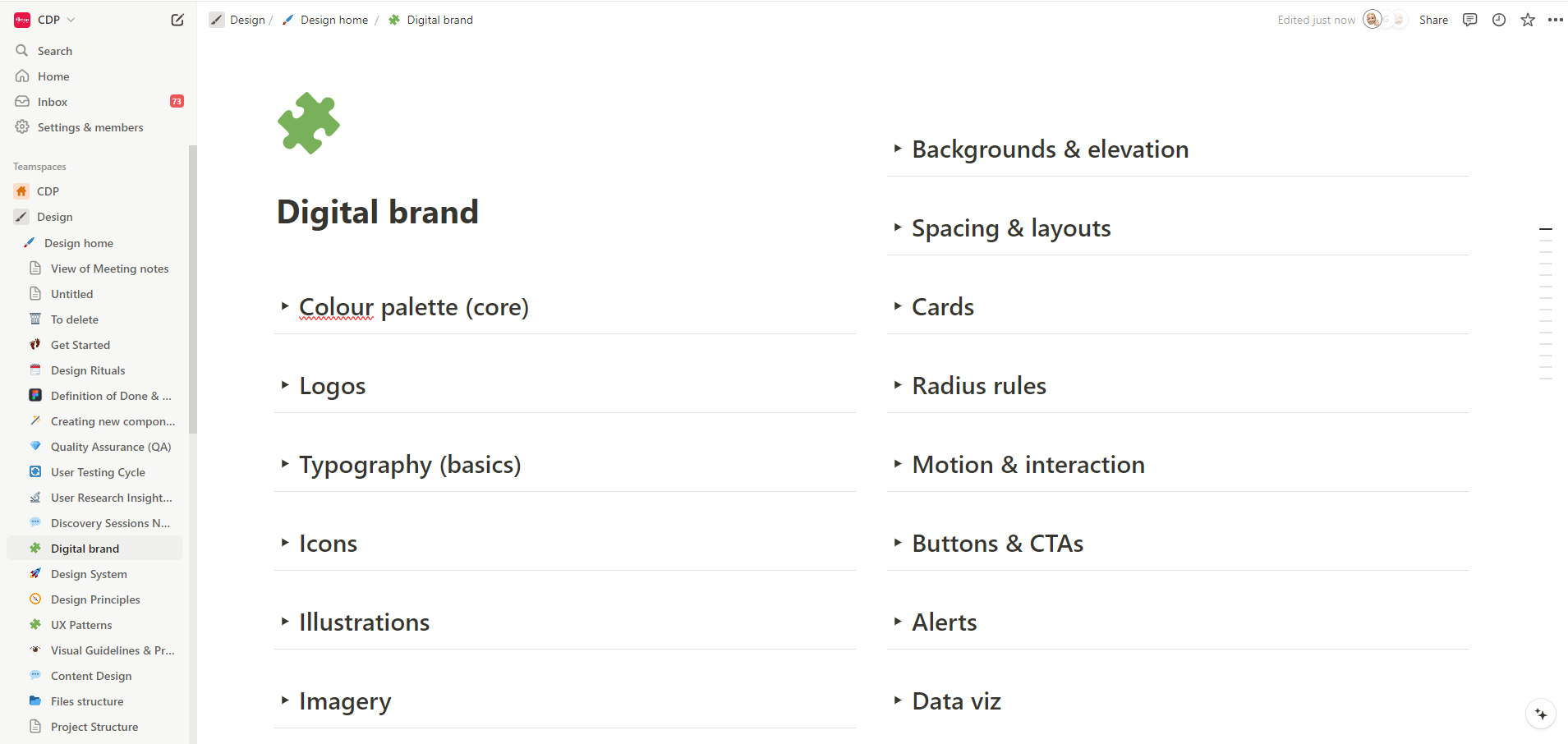
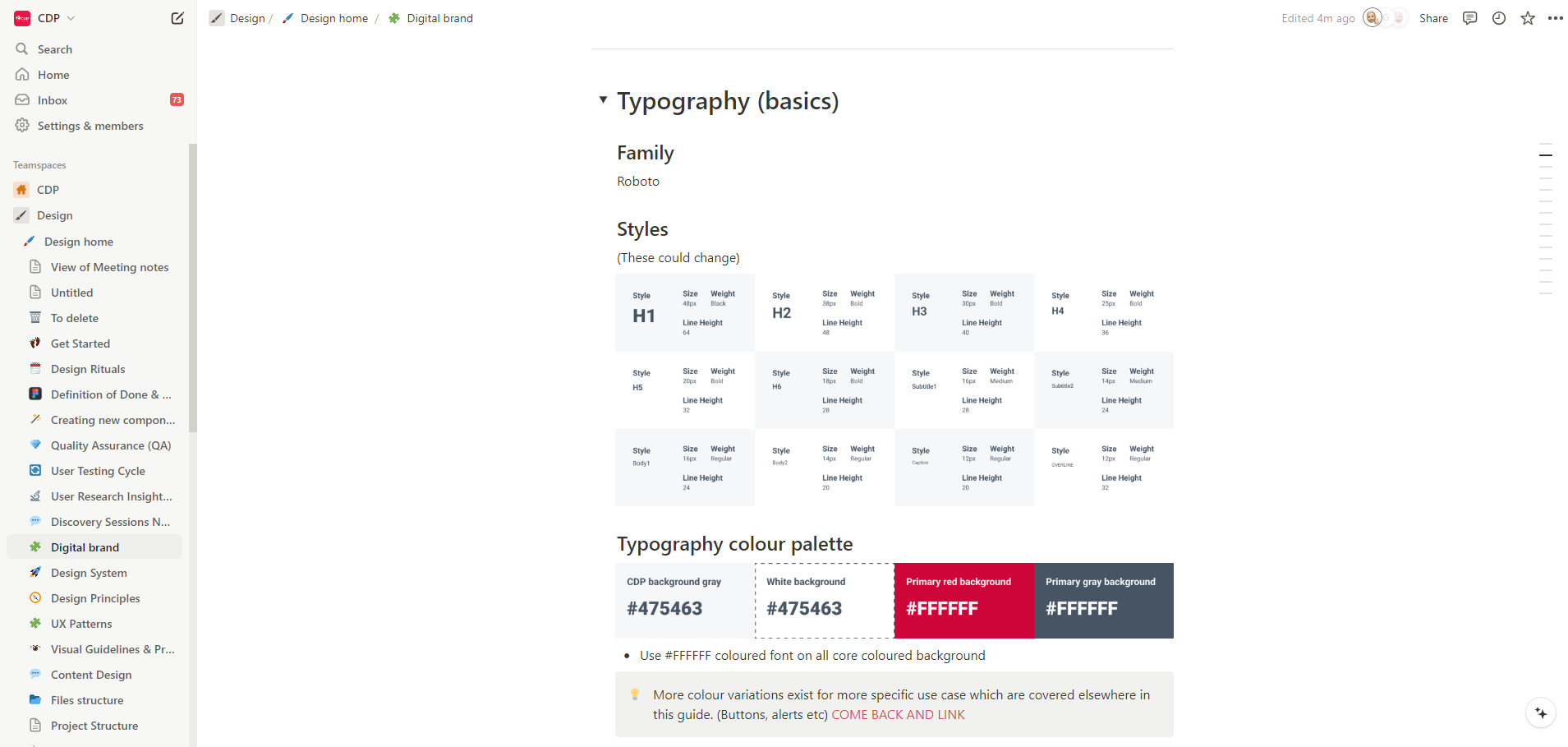
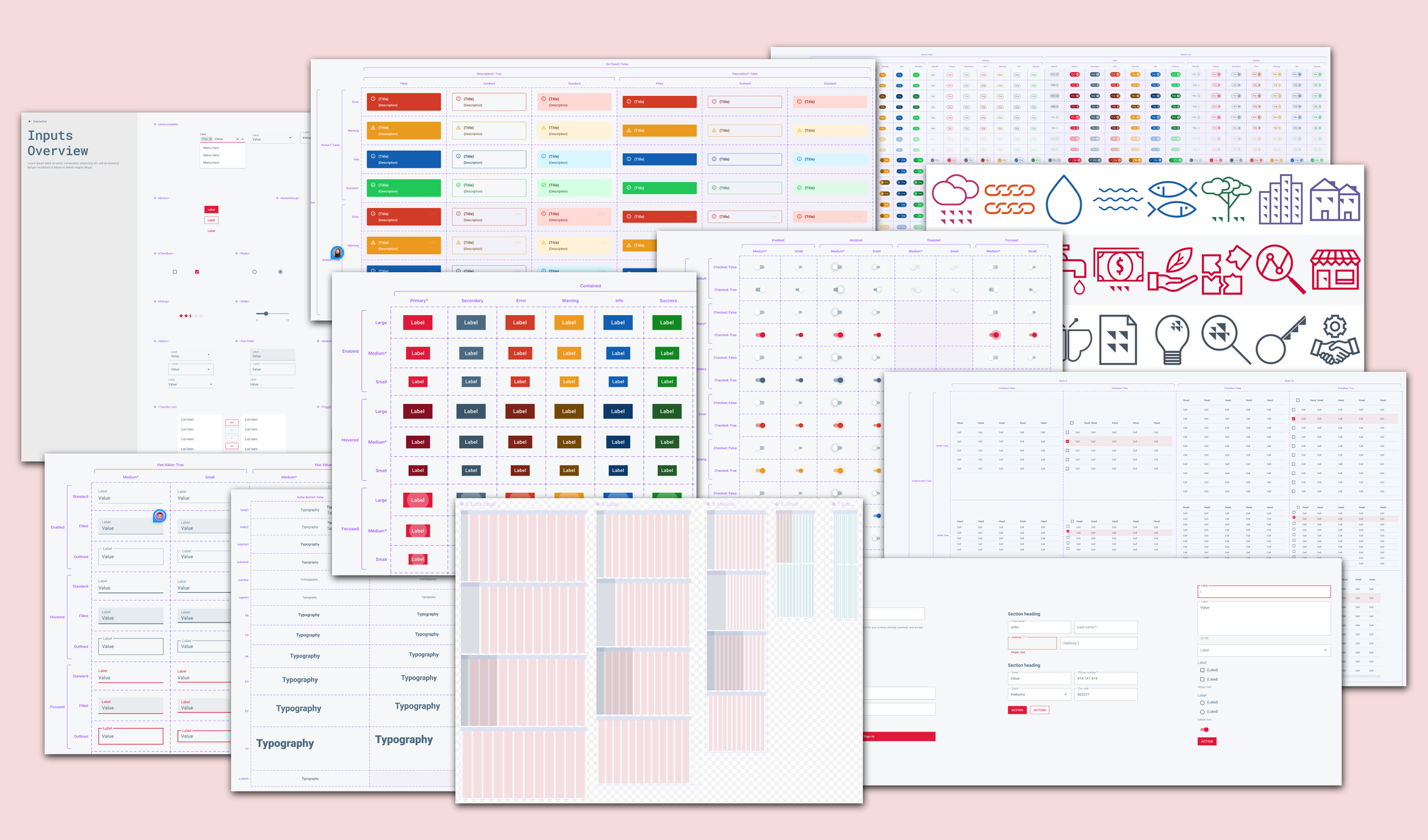
My task was to take the MUI component library, gut it, and use this skeleton to construct our own CDP branded asset library. Along with this, I built a foundation of digital design/brand principles. It was an exciting challenge to prioritise certain features and needs, progressively iterating on the new design system, while it was actively being used by other designers and devs. By building a complex set of variables, I set the file up so that we could change colours, spacing, typography, and other UI specifications instantly. The variables allow us to scale in real time seamlessly.
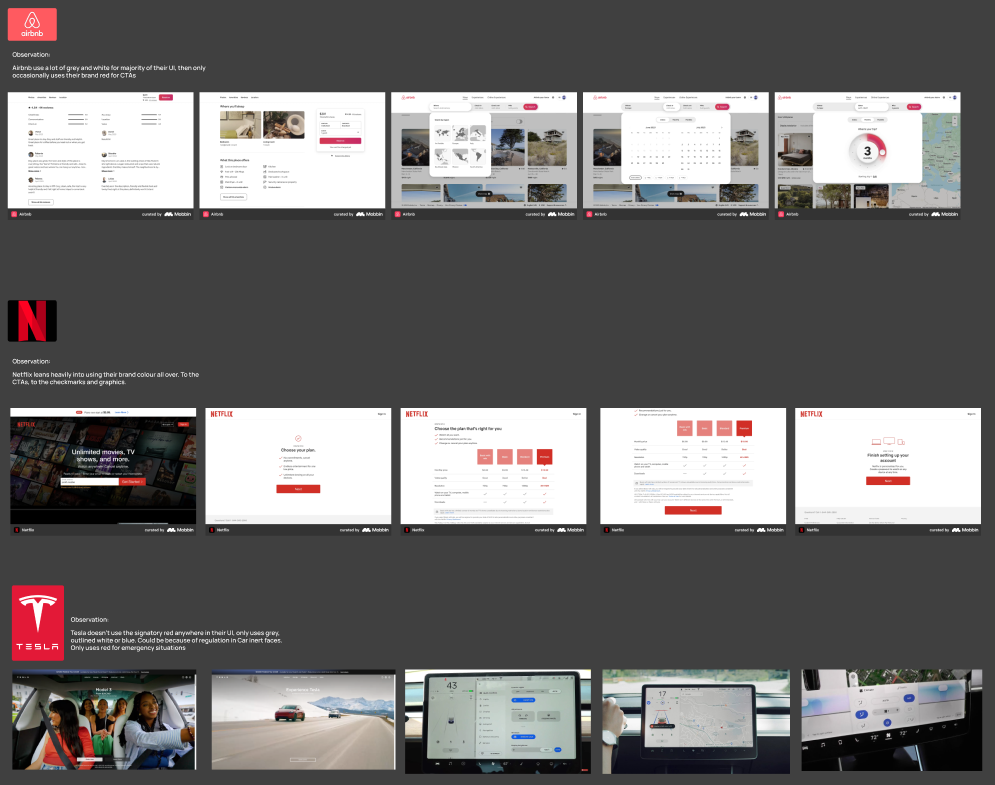
A major challenge was CDP’s primary colour, red. Using red so extensively posed issues for error messaging and component states. I conducted a competitive analysis across brands that have overcome the same issue, examining Netflix, Airbnb, and Tesla. Each had varying degrees to which the used their brand’s primary red colour. We adopted Airbnb’s approach of using red sparingly to help visualise hierarchy and impact. This helped us overcome the majority of issues but still is not perfect for a portal with such complex funcationality. In the near future, we will oversee a wider brand overhaul and plan to transition to Tesla’s approach. With this, we will establish a new different primary CTA colour, separating the red as a statement colour.
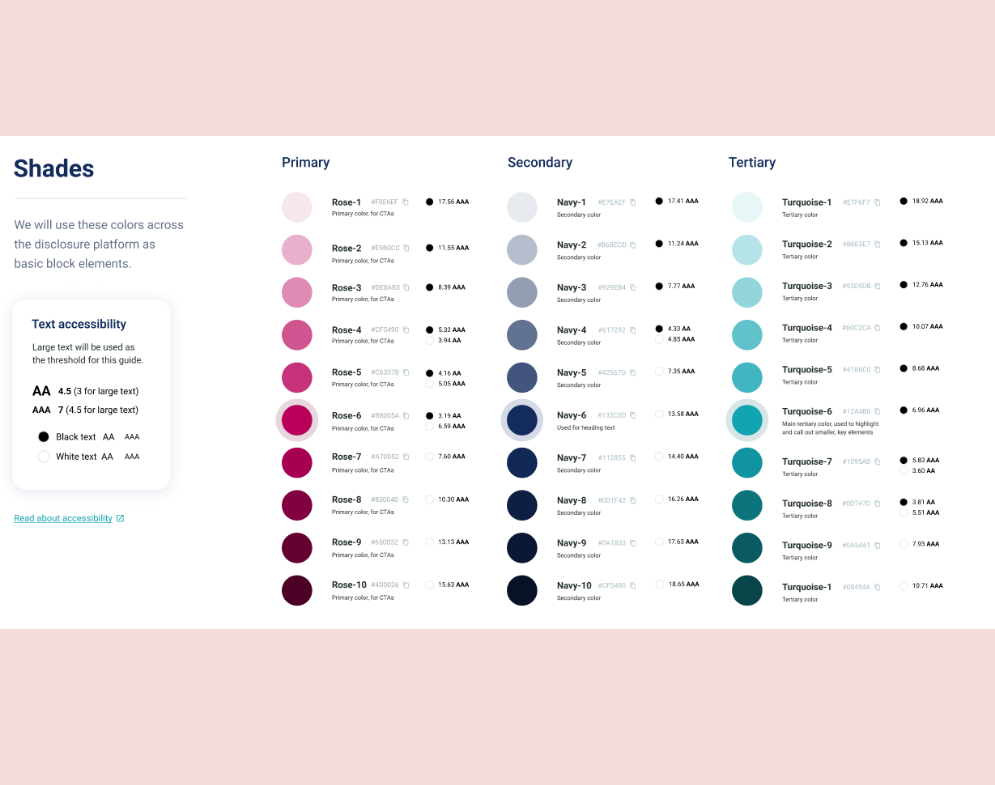
As the CDP product team grows, I have onboarded new members with the component library and, collectively, we have grown the file with many new custom components and templates. Towards the end of the MVP build, my focused shifted more to day-to-day website design, while still continuing to consult across the portal squads. Having cultivated these strong cross-squad relationships, I have been able build a more considered, holistic CDP user journey from initial contact, through the site’s single entry registration/sign-in point and into the portal.
LESSONS LEARNED
Working to a complex real-world brief and cross-company communication
Improved skills with - Adobe XD, Figma, Adobe Premier Pro, Illustrator, Photoshop, Azure
Working with a wider team of devs, designers, marketing and business specialists
Problem solving and project planning to overcome the unique inherent challenges of a non-profit - red tape, rigid budgets, limited resources, outdated processes/tools
Supporting substantial transition into new ways of working
Building for multiple regions and languages
Extensive practice in building intuitive, complex forms
Communicating UX reasoning to lay people
In-depth knowledge of environmental disclosing & ESG
Working both B2C and B2B
Scaling up to Hi-fi prototyping + development and implementation of a robust design system
Development of in-depth design system from scratch, including brand elements, typography, iconography, components, colour palette and more
Working across brand and product teams and helping to revolutionise an outdated brand
Applying UX fundamentals to achieve business metrics
Working with clients and SaaS
Presentation skills